Working together
I work on the tools businesses run on: ledgers, consoles, and multi-tenant products where trust, state, and permissions are the hard part. Three ways that usually starts, each one pointing at work on this site that already did it.
Before a team commits engineering time to the flow that decides the product, build that flow for real and use it.
Not a clickable mockup: a working build that enforces its own rules, so the question stops being whether the model reads well and becomes whether it survives contact. The cheapest way to find out a model is incoherent, while that still costs a fortnight instead of a quarter.
Right when
A model nobody can agree on, a spec that keeps growing, or a decision that keeps getting deferred because no artefact settles it.
Proof:OmniStock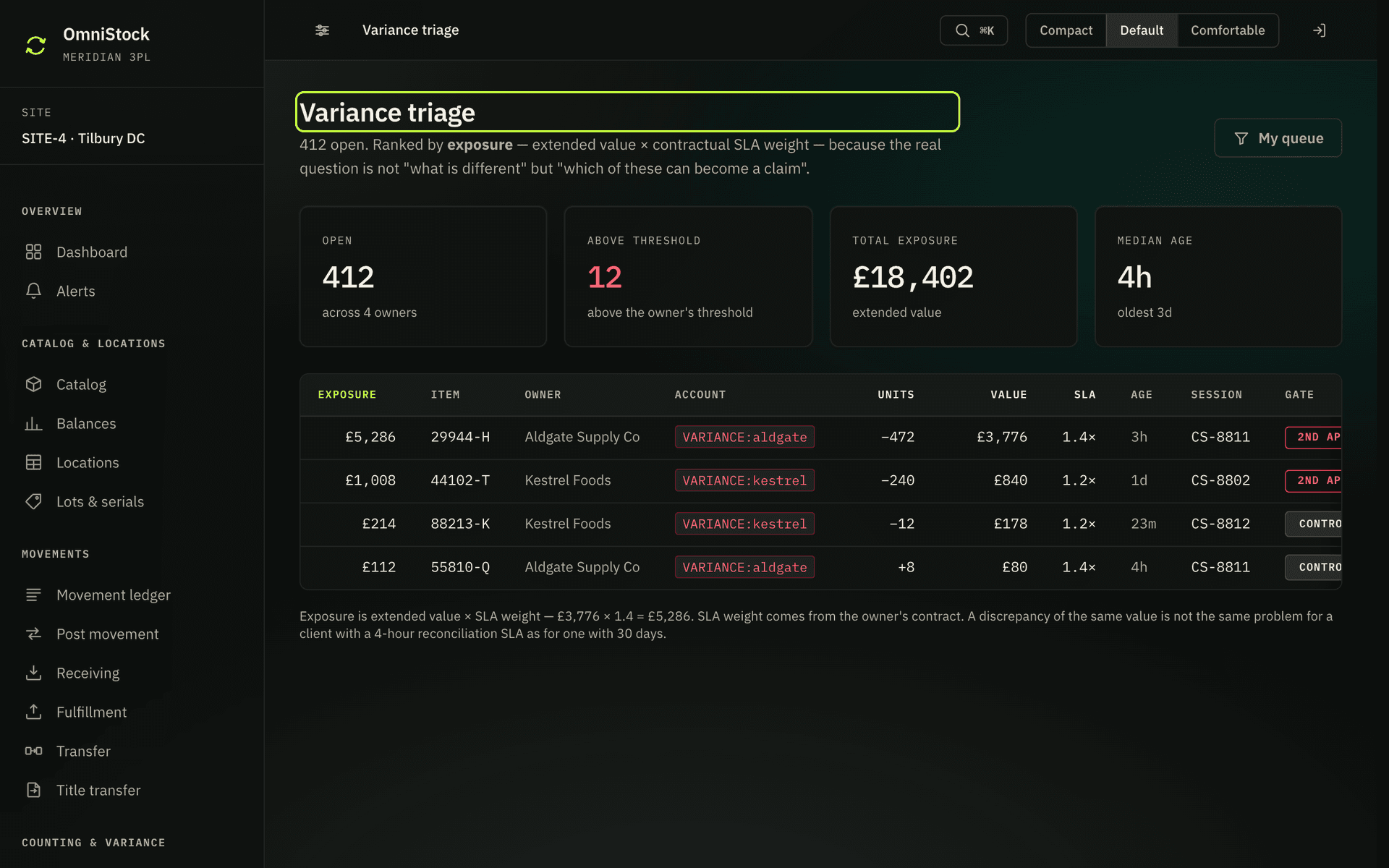
Interface design through to the production front-end, on one component system, by one person.
The handoff is where most of the design goes missing, not through bad faith but because a static file cannot specify motion, empty states, focus order, or what happens at 320px. When the same person designs and builds, none of that needs specifying, and what ships is accountable to measured numbers rather than asserted ones.
Right when
A marketing site or product surface where the gap between the comp and the live page keeps costing you time.
Proof:InsightsTap: Website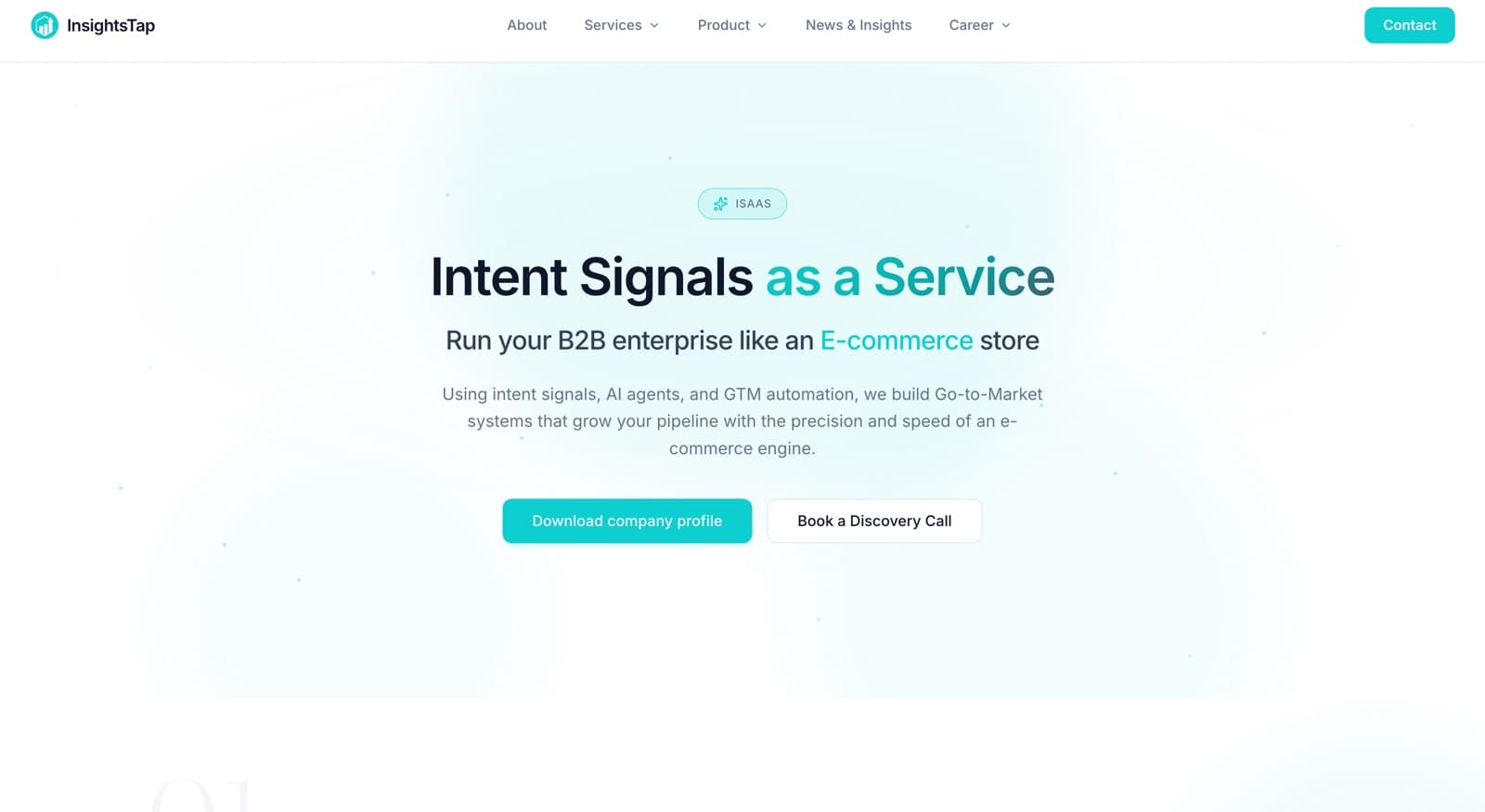
Tokens, components, and the accessibility and contrast rules built into the system rather than checked at the end.
A component library is the easy half. The hard half is the decisions underneath: how many status colours the product is allowed, what contrast every state has to clear, which figures are derived and can never be typed. Systems that hold up put those rules in the tokens, so the wrong thing is hard to build rather than discouraged in a doc.
Right when
A product where every new screen restarts the same arguments, or where accessibility keeps arriving as a late fix.
Proof:Meridian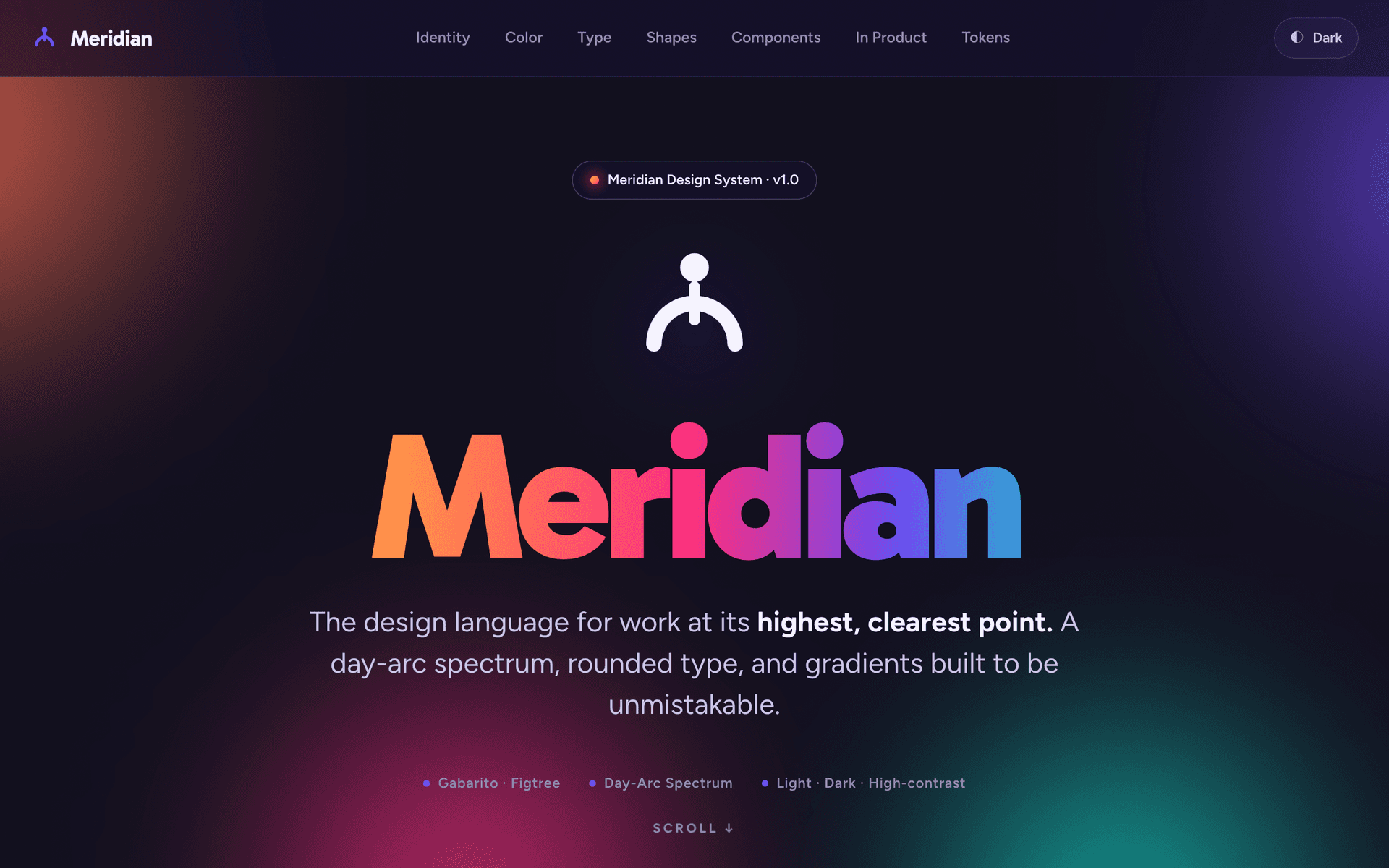
Free, 30 minutes. You describe the problem and where it stands. If I am not the right person, I say so on that call.
Scope, deliverables, timeline, and a fixed price, in writing, before anything starts. No hourly billing and no open-ended scope.
Progress is visible as it happens rather than revealed at a milestone. You see the thing running, early and often, and can change direction while changing direction is still cheap.
Source files, the running build, and the reasoning: what was decided, what was rejected, and which parts are still hypotheses. You should not need me afterwards to understand it.
One person who can decide. Design by committee is where timelines go, and it is not a scheduling problem.
Access to whoever knows the domain: the operations lead, the accountant, the person who actually files the returns.
Real data, or a real description of it. Products like these fail on the edge cases, and lorem ipsum has no edge cases.
Fixed price per phase, agreed in writing before work starts, so the number does not move while the work is happening. Tell me the problem and where it stands and you get a written proposal: scope, deliverables, timeline, price. If the shape does not fit a fixed price, I will say that too.
Worth knowing before a call, and honest about where this practice stops.
Design-only handoff on a system I cannot see running
For state-heavy products, a comp of one role at one moment is not enough to know whether the model is coherent. I would be selling you confidence I do not have.
Pitch decks, social creative, and marketing collateral as standalone work
I have done a lot of it and can, but it is not what this practice is for, and you can get it better and cheaper elsewhere.
Rescue work with a fixed launch date already announced
The first thing a rescue needs is permission to change scope. If the date cannot move, what you need is more engineers, not a designer.
Anything requiring me to claim results I did not produce
Everything on this site is labelled for what it is, including the concepts and the untested hypotheses. That does not have an exception.
If one of those is your problem, tell me where it stands.
 Praduan Saha