An outdoor gear shop where the weight is the hero stat and every weight carries a visible source. The interesting half is the back office: a catalogue tool that refuses to publish a number with no provenance, and has no field for a "was" price. More than eighty screens in one file, including the twenty-six nobody usually shows. You can open it and use it on this page.
A design and functional prototype on invented data. Real brand and product names carry invented weights and prices; Baseweight is not affiliated with any of them.
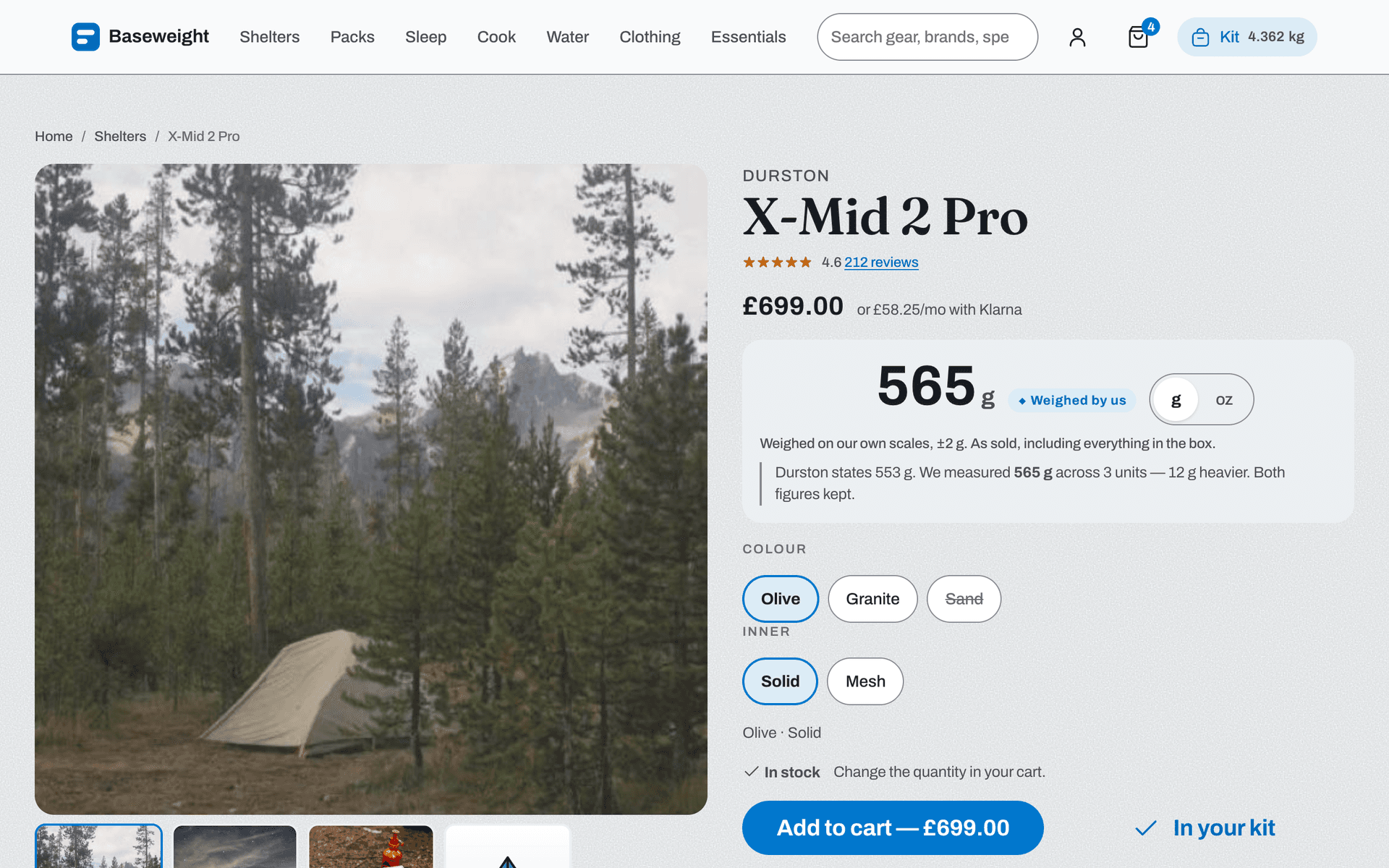
The real prototype, not a recording. It opens where a customer starts, on the welcome screen: sign in, create an account, or keep browsing as a guest. Nothing is actually gated, so every route through it reaches the shop. Runs entirely in your browser.The real prototype runs in your browser, but it needs a wider screen than this to be usable in-page.
Open the demo ↗Every shop selling outdoor gear says it is honest about weight. Baseweight is an attempt to make that a property of the software rather than a tone of voice: the number is defined, its source is attached, and the tool that publishes it will not let go of either.
Launch it and you start where a customer starts, on the welcome screen: sign in, create an account, or keep browsing as a guest. Nothing behind it is actually gated, so every route through reaches the same shop. Four surfaces sit in the window chrome: the Shop, the Kit builder where the argument is clearest, the Back office the shop is run from, and an index of every screen, because a claim about how much is built should be checkable rather than asserted.
The back office is the half a portfolio usually leaves out. It is unlinked from the storefront, so the tab above is the only signposted way in. Go to the catalogue, open a draft product, and try to publish it: the button refuses, and says exactly which of its six checks failed.
Everything below only matters because this is a shop first. It has departments, product photography, ratings, prices and a cart, and the argument lives inside that rather than beside it.
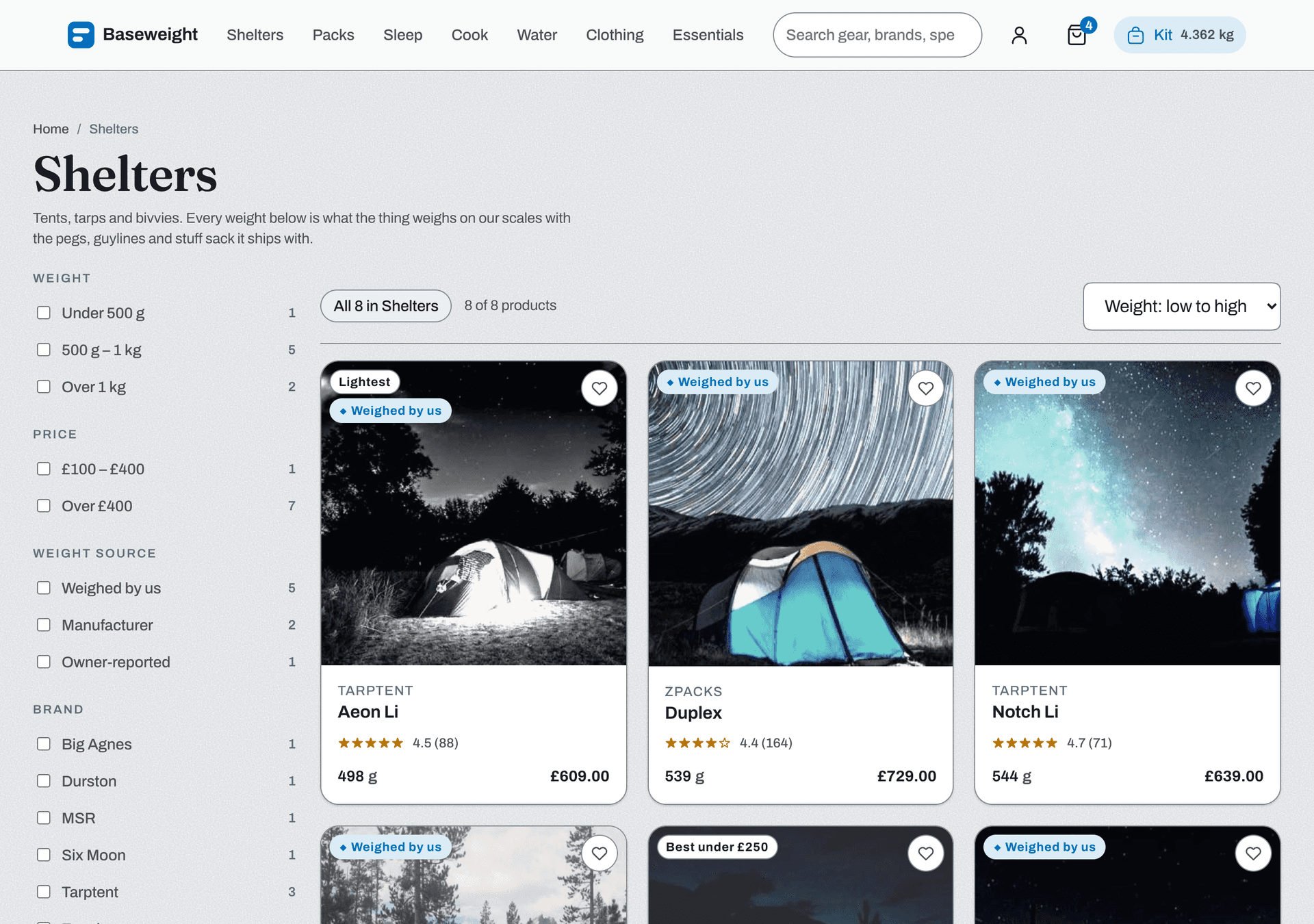
Every card carries the weight beside the price, and a badge saying where that weight came from. The provenance is not a detail page people never reach: it is on the grid, at the moment of comparison.
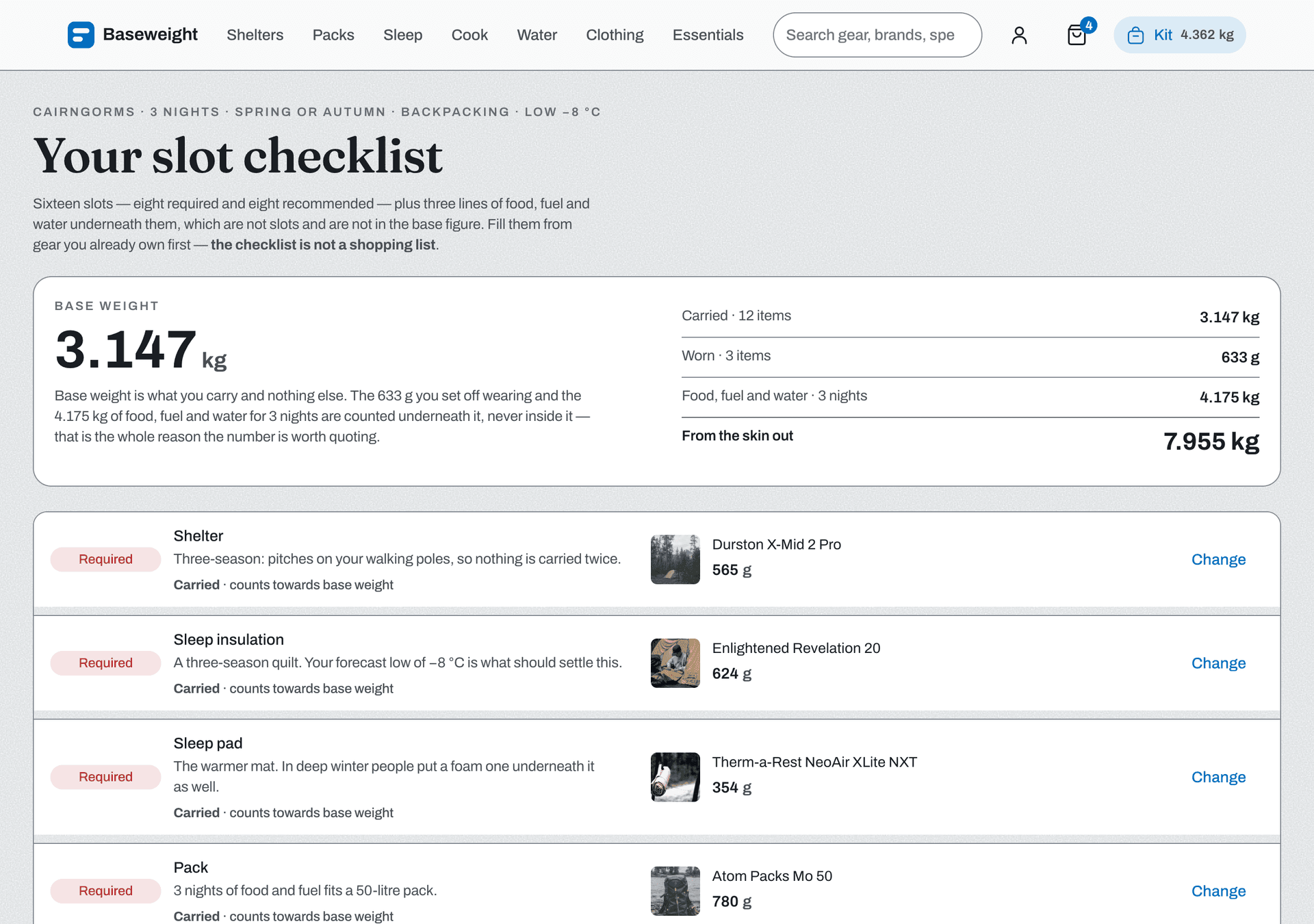
Base weight is the figure this whole category competes on, and it is trivially gameable: move an item from carried to worn and the headline drops without a gram leaving the pack.
So the planner refuses the ambiguity. It shows four totals at once, and labels two of them (excluded) in the same breath as printing them.
Every row carries its provenance in the same glance: Durston, weighed by us sits directly above MSR, manufacturer. The difference between those two is the entire product.
The easy version of this feature shows whichever figure flatters the shop. Baseweight prints both whenever they differ, including when its own measurement is the heavier one.
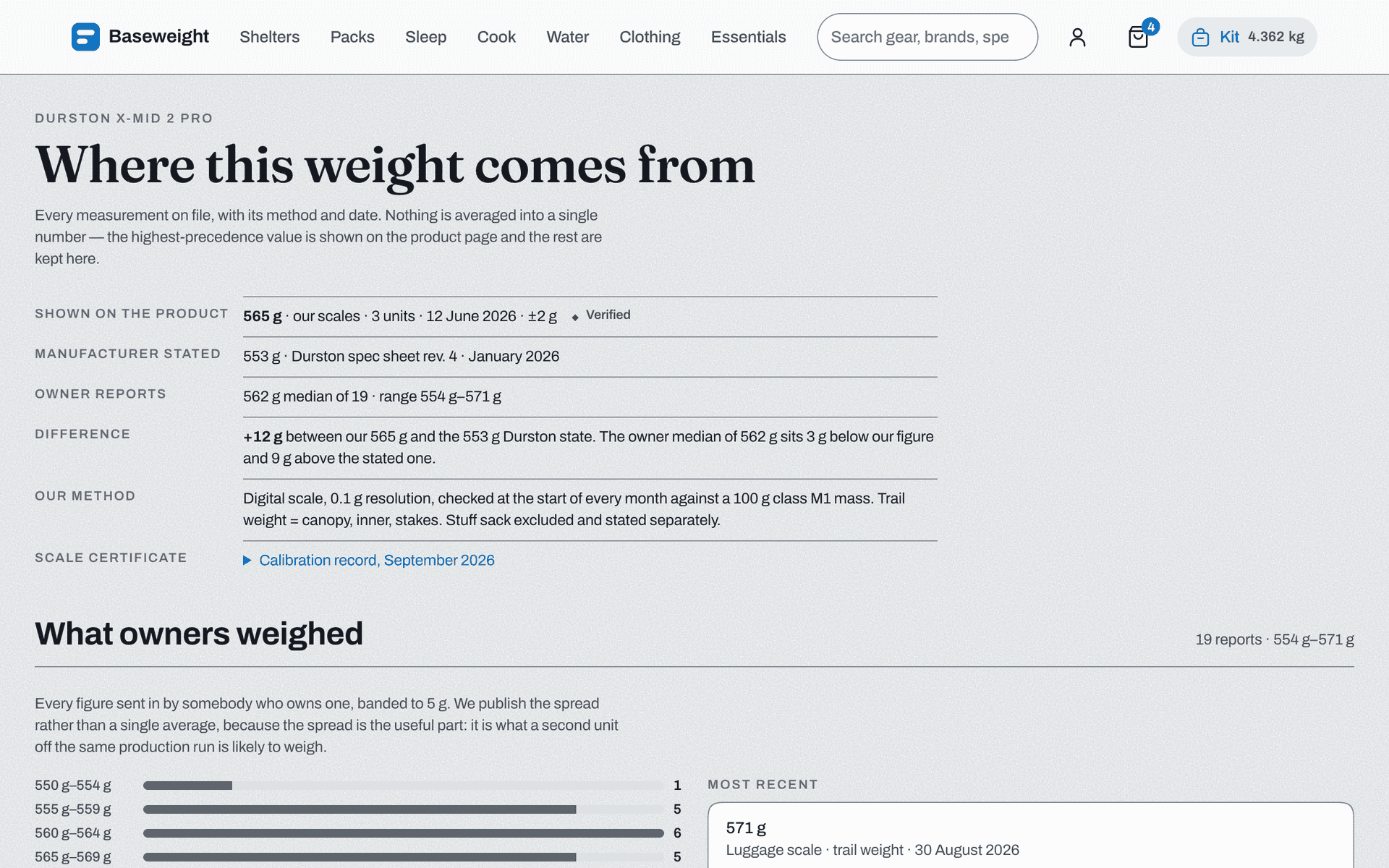
The measurement record goes further and declines to average. Each reading is kept with who took it and how, and the published figure is a median over the set, so the spread stays visible instead of collapsing into one confident-looking number.
Everything above is a storefront promise, and a storefront promise is worth nothing if the tool behind it lets an operator type whatever they like. So the same rule is compiled into the catalogue.
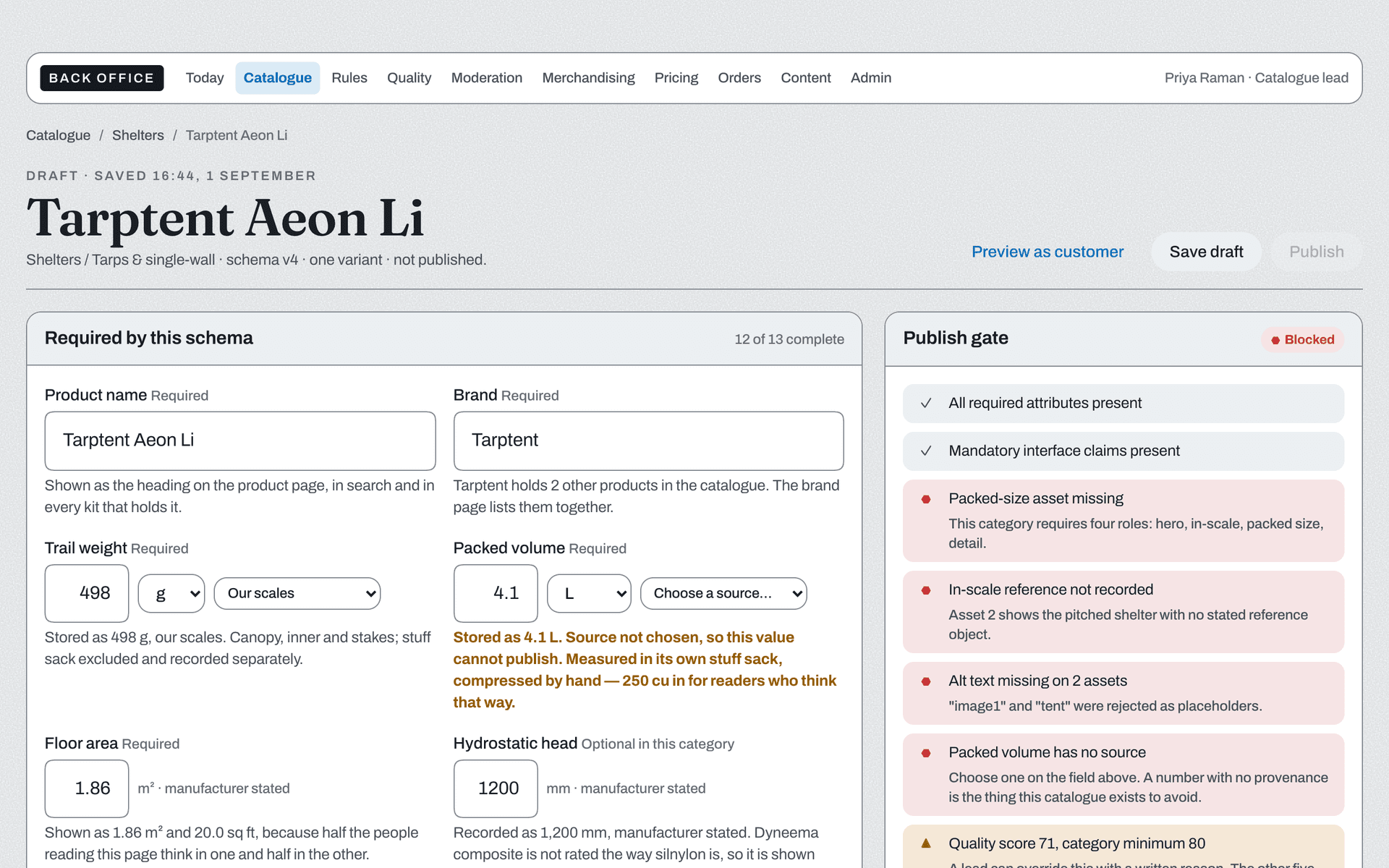
The strongest parts of the back office are the things that are missing. There is no field for a "was" price, so the phrase You saved £X exists nowhere in the build except as the name of a component deliberately not made. The urgency patterns a shop reaches for when a quarter is going badly have no components to reach for.
Two defects turned up while writing this, both now closed. The sign-in screen was still printing 2,411 items weighed in-house and 38,000 owner reports, statistics the home page had already retired in favour of counting its actual catalogue, and a comment in the source names the failure better than I could: a statistic about our honesty that is not itself true is the worst line on the site. Those two figures are now counted from the same source as the home band. Separately, checkout was the one unbuilt surface that did not say so while looking the most like the real thing, and it now leads with the fact that no payment is taken.

 Praduan Saha